Newsroom
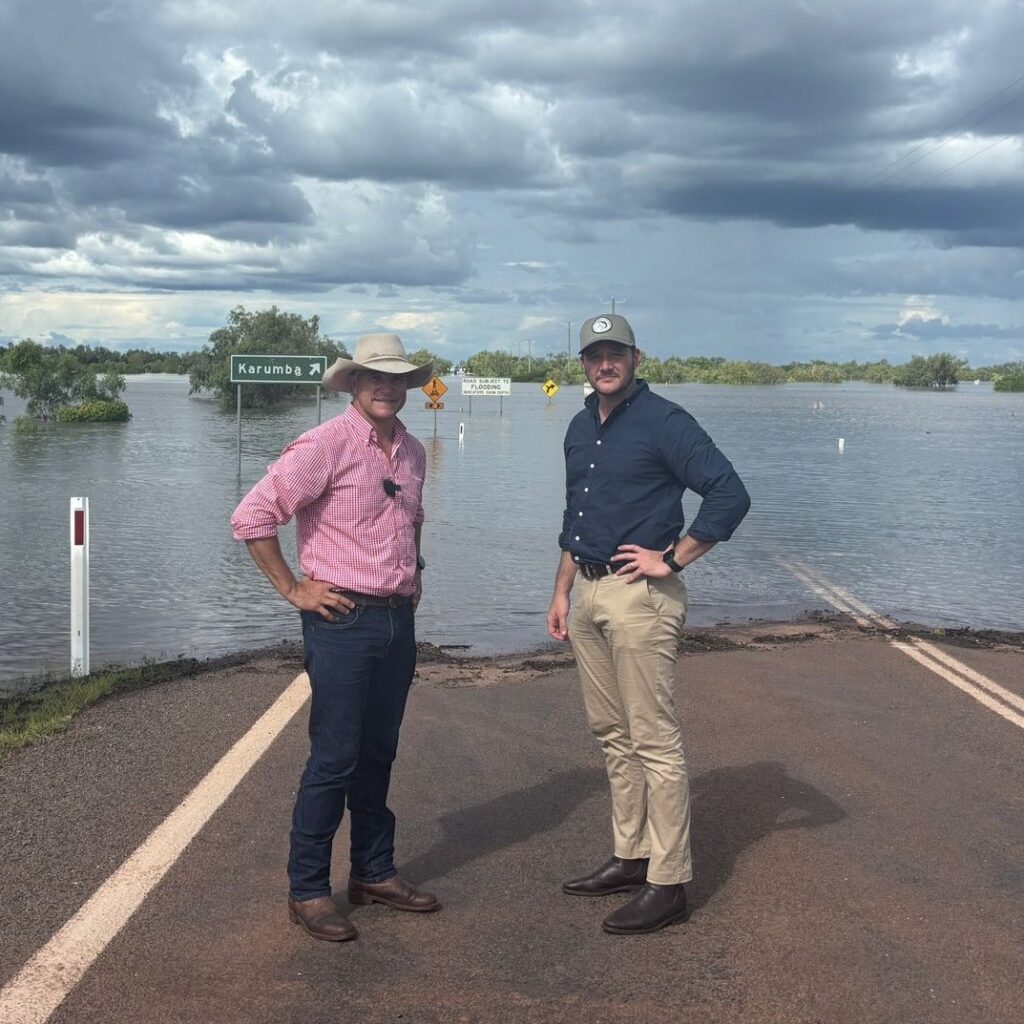
Flooded Again – but Governments still dry on solutions – Katters tour disaster zone
January 12, 2026
KAP Federal Member for Kennedy, Bob Katter, has unleashed on the federal and state government warning that this year’s flooding, stock losses and road destruction across the mid-west and Gulf must be the turning point for governments who continue to treat North Queensland’s annual wet season as an “unexpected emergency” instead of preparing for it properly.
Mr Katter said the region cannot continue enduring the same crisis, the same damage, and the same bureaucratic battles every single year.
He warned the government that the scale of this year’s losses will not be minimised or brushed aside.
“If the losses compare to the last flooding event, and the government thinks it’s going to get away with a $75 million package when last time it was $270 million, they have another ‘think’ coming.
“Up here, we don’t have stream flows; we have a dry, and then massive flooding,” Mr Katter said.
“This is not a surprise. It happens every single year. The surprise is that governments still insist on reacting instead of preparing and providing the local councils and farmers with the support they need to deal with it.”
He said it is past time that Category D disaster funding is automatically activated at the start of every wet season, not negotiated after communities have already suffered.
“We shouldn’t be fighting after every wet for Category D. It must be automatic when vital assets essential for cattle operations are damaged. Last time, the local supermarket couldn’t get goods through and had huge stock losses, and they weren’t eligible for a cent. This sort of bureaucratic nonsense has to stop.”
Mr Katter said bureaucratic delays and pedantic processes were costing lives, livelihoods and entire local economies.
“Petty public servants are tying this process up in knots. They cross every T and dot every I while our communities bleed. I warn governments: people have had a gutful.”
Mr Katter has spent the past fortnight contacting mayors, graziers and farmers across the Gulf and mid-west.
“I’m laid up with a broken foot, but my Electorate Officer Chief of Staff has been out there with Robbie Katter, touring the areas. The cattlemen are reluctant to confirm total losses yet, but the damage is real, and it is unacceptable that we’re still dealing with this like it’s a new problem.”
He said failures by the Bureau of Meteorology (BOM) were a prime example of reactive rather than proactive systems.
“The BOM found $96 million to rejig their website but can’t keep river height gauges working in some of our most vulnerable communities. In Doomadgee, this means people don’t know how high the water is or when it’s coming. That’s not a reactive failure; that’s a complete failure to plan and it simply shouldn’t happen.”
Mr Katter said the locals he spoke to were no longer interested in only compensation packages after the fact.
“One leading cattleman said to me, ‘I don’t want to hear about compensation – I want to hear that we’re dealing with the problem.’ I agree with him completely.”
He said the real solutions lie in engineering, water management and local autonomy, not from airconditioned government departments Brisbane.
“North Queensland is governed 2,000 kilometres away by people who don’t understand the land. There’s a million square miles of black soil out here. Two inches of rain seals it over and every drop runs off so of course it floods. But year on year they keep doing nothing.”
Mr Katter said the KAP’s long-term plan for the region includes:
- 200 hectares of freehold irrigation for every owner-operator cattle station
- The long-delayed Hughenden Dam, funded by the $200 million already available from the Commonwealth
- Support for families already storing water and producing fodder to reduce losses in dry periods
- Huge improvements to the BOM services across the gulf and mid-west including water and wind gauges, as well as better access to radar data.
“The Entrikens, McClymonts and Lords are proving what can be done when water is managed properly. The State Government must stop blocking the Hughenden Dam. The money is there federally, and we know they have the money in the state. The need is obvious. The excuses have run out.”