
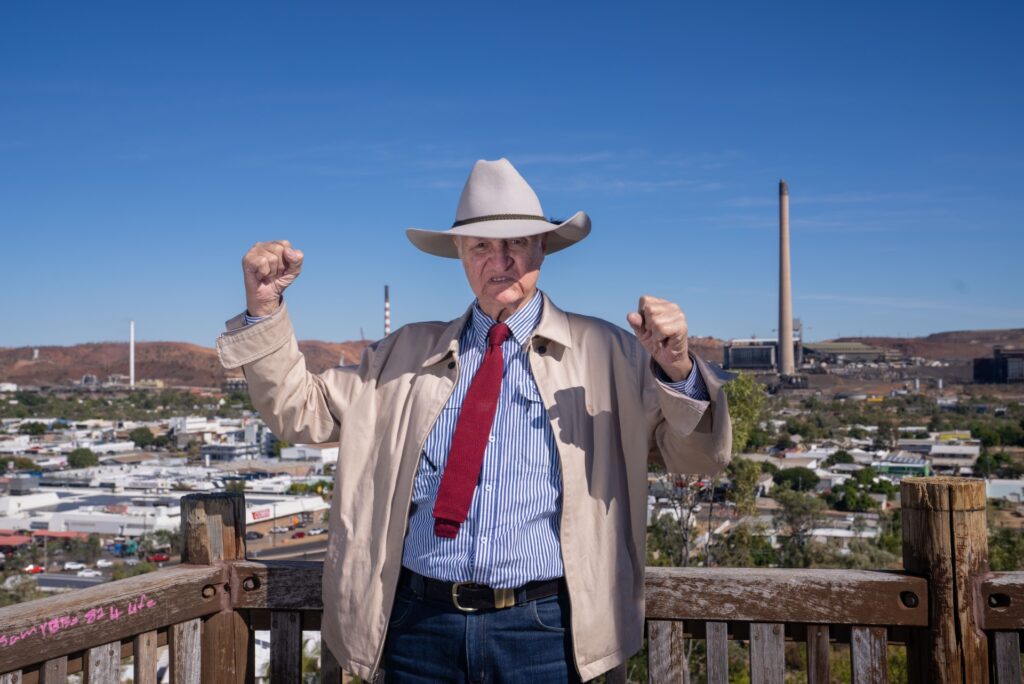
KAP Federal Member for Kennedy Bob Katter has welcomed the completion of the sale of Phosphate Hill, celebrating it as a major win for North West Queensland workers, industry and the future of Australian fertiliser production.
Mr Katter said the announcement represented the culmination of years of relentless campaigning to keep one of Australia’s most strategically important industrial assets operating.
“This is wonderful news for North West Queensland,” Mr Katter said.
“For years we’ve been bashing the doors down, that if Australia wanted to keep industry alive, governments had to step in and secure a future for assets like Phosphate Hill.”
Mr Katter said the federal government’s Reserve Resource Policy had been instrumental in helping create the conditions for the sale.
“Getting a Reserve Resource Policy in place has been one of the major achievements of my political life. We fought tooth and nail because Australia should never be paying world-leading prices for our own gas.
“Our competitors in countries like the United States and Russia have access to affordable energy, while Australian manufacturers have been paying more than $16 a unit for gas.”
Mr Katter said affordable gas was fundamental to the survival of the North West’s industrial base.
“Everything at Phosphate Hill depends on gas. It powers the plant and drives the chemical processes that turn our natural resources into the fertiliser.
“Only a year or so ago we were staring down the barrel of losing one of Australia’s biggest industrial centres, with the closure of copper and phosphate production threatening thousands of livelihoods across the North West.
“This is an enormous relief for the workers, contractors, families and communities who never gave up.
“I particularly want to thank the people of North West Queensland who stood together and fought for this outcome. They refused to accept that these jobs should disappear, and today their determination has been rewarded.”
Mr Katter said the focus must now be on ensuring Phosphate Hill has the affordable energy certainty needed to remain strong operation for decades to come.