
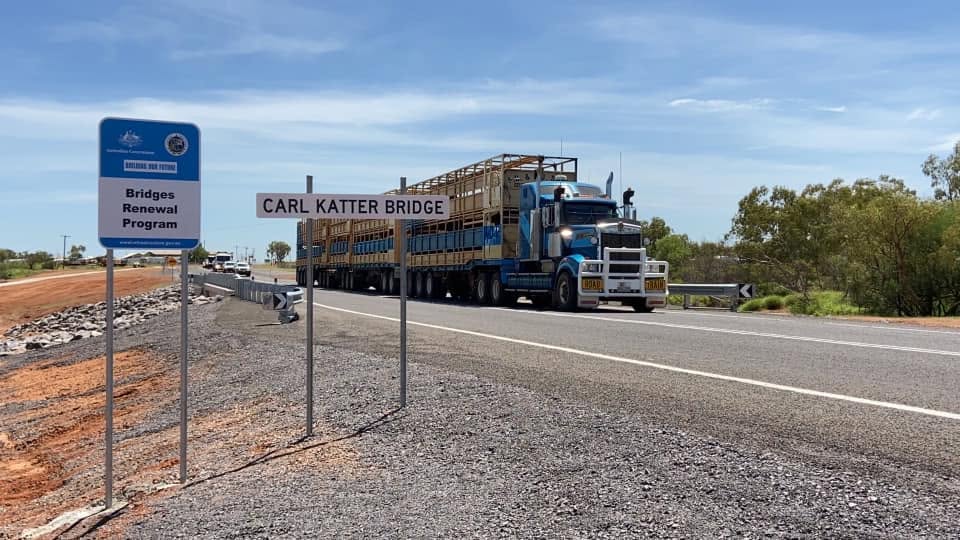
In a scathing rebuke to transport regulators who are risking remote food supplies by banning trucks on outback roads so rough that they are unworthy of bitumen vehicle roadworthy standards, Kennedy MP Bob Katter has requested the Prime Minister intervene to ensure a sustainable solution to the bureaucratic crisis that threatens to deprive North Queensland’s most remote and First Australian communities of perishable foods, fuel and other essentials such as mail deliveries and disaster coordination, to shifting livestock over thousands of kilometres.
Since making urgent representations to the Minister for Indigenous Australians last week, in tandem with Traeger MP Robbie Katter’s meetings with the Queensland Government, to implore State and Federal transport regulators to lift their trucking ban on the only willing-and-able operator, Mr Katter has cautiously welcomed:
· an overnight reversal by the National Heavy Vehicle Regulator to lift a prohibition order ahead of a court challenge, and instead work more constructively with Hawkins Transport to get the fleet of 70 back up and running across the remote region and 75 staff back to work, despite requiring a 1000km round-trip for the nearest vehicle inspections at Mount Isa; and
· the Federal Minister’s use of extraordinary powers on behalf of First Australians to ensure an interim emergency transport substitute for the sole service provider out of Normanton – 2000km from Brisbane – supplying the Gulf of Carpentaria and Cape York Peninsula remote Community Enterprise Queensland stores at Doomadgee, Pormpuraaw, Kowanyama and Wujal Wujal since 2012, along with other remote communities and cattle stations including Burketown, Georgetown, Croydon, Karumba, Gregory, Mount Surprise, Canobie, Lorraine, Floraville, Neumayer Valley, Wollogarang, West Moreland, Calvert Hills, Redbank, Hells Gate, Escott, Delta Downs, Mutton Hole, Inverleigh and more.
Mr Katter warned alternative freight operators were “few and far between” as much of the unsealed road network resembled “dusty goat tracks that get cut off every wet season by untrammelled floodwaters over notoriously neglected infrastructure” – and every day of bureaucratic stonewalling escalated regionwide anxiety about the viability of the recognised local business of nearly 30 years.
“Whilst we have been desperately trying to keep 75 staff and heavy vehicles on the roads, it’s not easy to get workers in far-away places like Normanton, where they’ve been doing a wonderful job.
“But to not give them natural justice in due process? These people in city towers whose shoe leather has never set foot off the pavement, who have zero grounding in the reality of life beyond the bitumen, nor do they seem to understand the rule of law. But they will when national attention is turned on their critical incompetence in depriving the people of these little towns of their food supply.
“And I do not exaggerate the situation. Myself and the Member for Traeger have been on the phone all day without a decision and, quite frankly, the people we dealt with couldn’t care less. That’s the attitude that’s resulted in the rapidly decreasing life expectancy of our First Australians.
“But I can assure all Ministers responsible that whilst neither the Prime Minister nor Premier will say anything, no PM or Premier likes a Minister who brings opprobrium on their government or party.
“These First Australian communities must have a reliable way of accessing both perishable and non-perishable produce since successive governments have taken away their rights to operate market gardens and go fishing.
“And no fair minded-person – even if there is a bit of racism in there – would stand by and allow a situation where you have all these tiny towns’ food supply to be cut off.
“But I’ve got news for them: if you are the Minister – whether it’s for Transport or First Australians – then you are responsible. And if you think the PM doesn’t take notice of these things and record them, then you must also believe in the Tooth Fairy.”